
Church Events
| October 2026 | ||||||
|---|---|---|---|---|---|---|
| S | M | T | W | T | F | S |
| 01 | 02 | 03 | ||||
| 04 | 05 | 06 | 07 | 08 | 09 | 10 |
| 11 | 12 | 13 | 14 | 15 | 16 | 17 |
| 18 | 19 | 20 | 21 | 22 | 23 | 24 |
| 25 | 26 | 27 | 28 | 29 | 30 | 31 |
The Week Ahead
Saturday 17th October
- 20:00
Sunday 18th October
- 11:00
Monday 19th October
- 09:45
- 18:00
Tuesday 20th October
- 09:45
- 13:15
- 21:00
Wednesday 21st October
- 09:45
- 14:00
Thursday 22nd October
- 09:45
- 11:00
- 18:00
- 19:45
- 21:30
Friday 23rd October
- 09:45

Worship & Music
The Organ
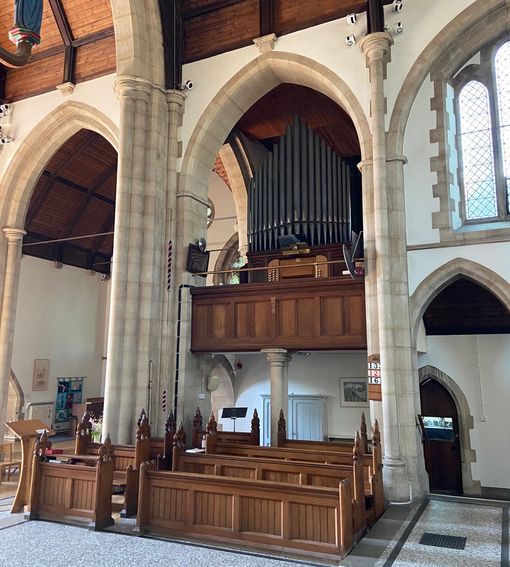

Update: March 2026
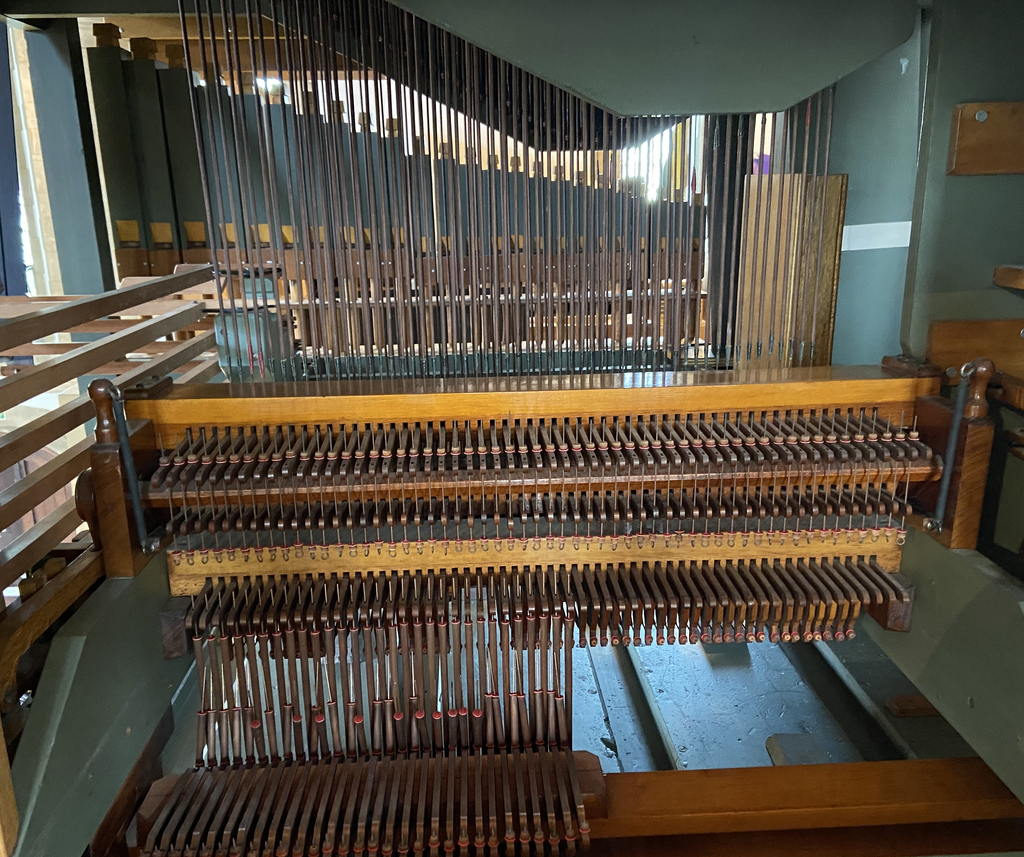
We are delighted that the urgent conservation repairs to our historic Henry Willis I pipe organ, which was unusable, have begun.
We will restore the instrument to safe, reliable use for worship and choral music,
 with continued learning access, through cleaning, re-leathering and mechanical repairs.
Work will be carried out by Simon Brown of Ark Voicing Ltd, supported by a generous grant from The Benefact Trust.
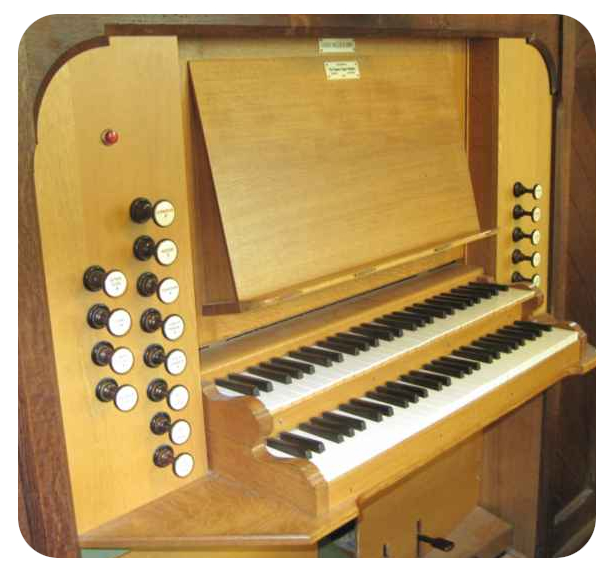
Great:
Fifteenth 2'Principal 4'
Clarabel 8'
Dulciana 8'
Open Diapason 8'
Swell:
Cornopean 8'Mixture II
Gemshorn 4'
Lieblich Gedakt 8'
Violin Diapason 8'
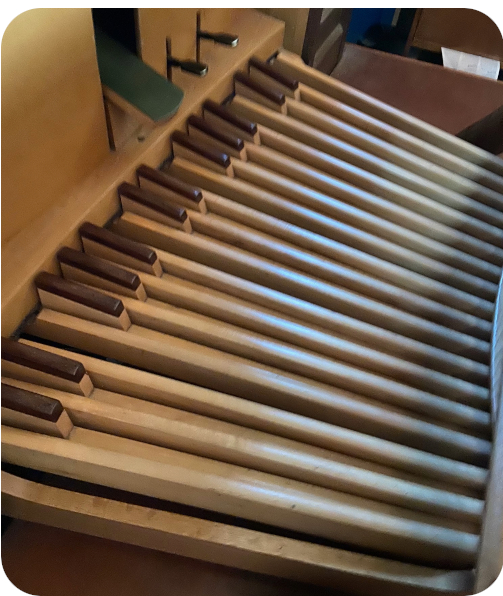
Pedal:
Octave Flute 4'Quint 5 1/3'
Bass Flute 8'
Bourdon 16'
Couplers:
Swell to GreatSwell to Pedal
Great to Pedal
A note on The Father Willis organ
in
St Michael and All Angels church, Summertown
The Father Willis organ in St Michael and All Angels church, Summertown,
is a notable piece of musical (and Summertown) history.
It dates from c1885 when it was intended for the church of St John the Baptist in Middle Way, Summertown, which had been established in 1832 but was demolished in 1924. The organ was moved to St Michael's in 1910, shortly after Summertown's new church was built on the Lonsdale Rd site, and following its consecration, appropriately on the patronal feast-day of Michaelmas (29 September) 1909.
The Willis organ was a significant addition to the church, and is still very much cherished for its musical quality. Over the years, the instrument has undergone some significant renovations, the most recent being back in 1984 by the Somerset firm, Deane of Taunton. However, its core structure and tonal character, as designed by Father Willis, have been preserved. Now, 41 years on, the 140-year-old organ stands in need of a major overhaul to ensure its continued place in the liturgical life of our church for generations to come.
Father Willis organs are highly regarded in the world of church music, and they are known for their craftsmanship and the rich, powerful sound they produce. Henry "Father" Willis (1821-1901) was the pre-eminent British organ builder of the Victorian age, with his firm established in Camden. He became famous for his ability to create organs that were both mechanically and tonally excellent, with a focus on allowing for a wide range of expression. Many of his instruments can be found in major churches and cathedrals across the UK, including nearby Oxford town hall (a mighty four-manual example, installed in 1897-98 when the opening recital was performed by Sir John Stainer), and Blenheim Palace (an even grander example of Willis's craftsmanship, installed 1891-93, and boasting 2,300 pipes, making it the largest organ in private ownership in Europe).
In St Michael and All Angels, the Willis organ continues to serve as a central part of the church's musical life, playing a major, even indispensable role in services and concerts.
The church itself is a lovely example of Edwardian architecture, reflecting as it does traditional Early English Gothic design. The organ complements the imposing atmosphere of the building with its remarkably symmetrical, if somewhat understated case which is best viewed from the south side of the church.
Our Fr Willis organ is celebrated for its bright, clear tones and the strong presence it gives. It benefits additionally from the church's famously excellent acoustics, which are designed to allow the music to carry throughout the building, with a wonderful second or two of reverberation before its sound finally dies away.
By any reckoning, the organ we are so very fortunate to have represents a portion of the marvellous legacy of Father Willis which has been entrusted to us, which is well worth preserving, and thereby securing for the future.
Patrick O’Meara
Churchwarden SMAA
June 2025
Today's Prayers
News